How AI is reshaping the learning environment and the future of education
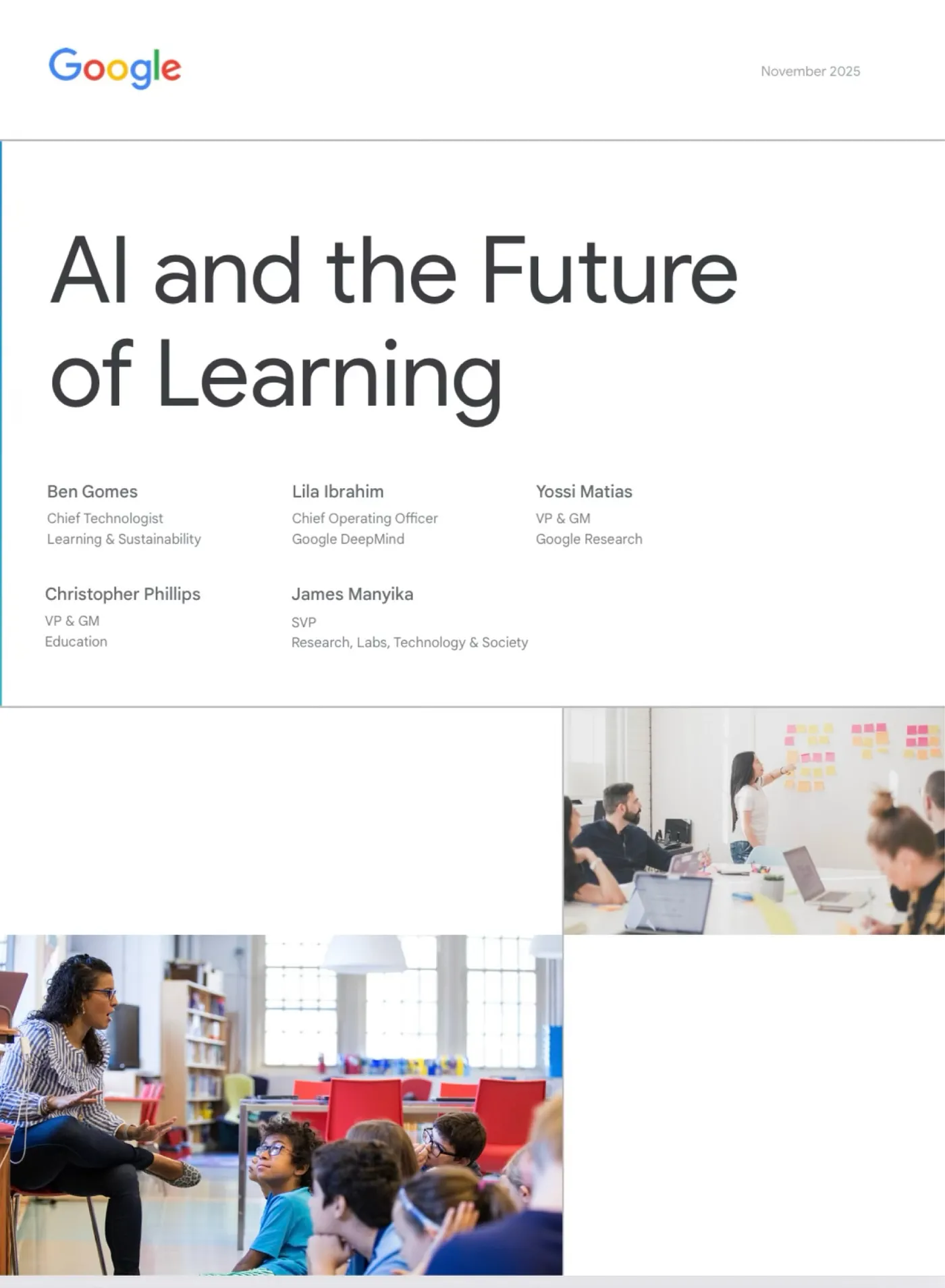
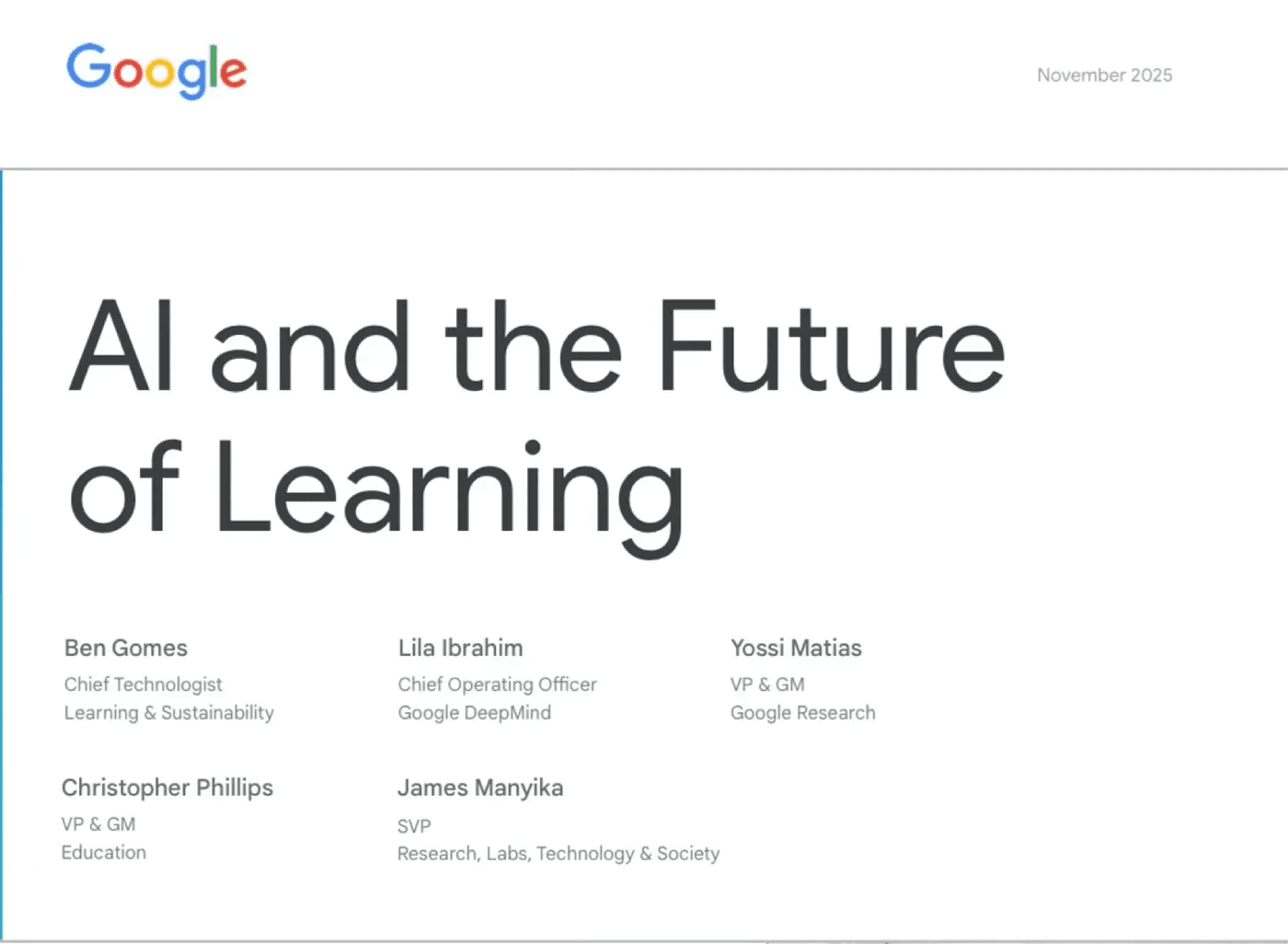
In early November 2025, Google published its report on how AI is reshaping the learning environment and the future of education. Here are the key takeaways.

Sergei Andriiashkin
Founder and Strategy Partner
AI
/
Nov 14, 2025
1. AI will become the engine of large-scale personalized learning.
For the first time, Google believes we can get close to “a tutor for every learner”: individual pathways, contextual adaptation, instant support, gap-closing, and accessible high-dose tutoring for everyone. AI doesn’t replace teachers — it creates a layer that helps each student learn within their zone of proximal development.
2. AI shifts learning from passive consumption to active understanding.
If the internet provided access to information, AI provides access to comprehension. It simplifies complex topics, reduces cognitive load, reveals connections, strengthens deep thinking, and makes nearly any subject learnable.
3. AI removes barriers: language, accessibility, and level of preparation.
For billions of learners, the main constraints are language, uneven content quality, and lack of teachers. AI translates, adapts, and reshapes materials to fit level, format, and need — expanding access to high-quality learning. It raises not only the ceiling, but the floor, especially in low-resource contexts.
4. For Google, the most important role of AI is enhancing teachers, not replacing them.
AI takes over lesson preparation, routine tasks, formative assessment, micro-testing, group management, and feedback generation. This frees teachers for what only humans can do: motivation, mentorship, emotional connection, and cognitive development.
5. Google highlights the challenges: accuracy, safety, critical thinking, and misuse.
models can hallucinate or make errors;
children require multilayered safety;
without careful design, AI can cause “metacognitive laziness”;
the line between “using AI” and “cheating” is still unclear.
Google notes that these risks will define the real impact of AI on education.
6. Google’s core pedagogical principle: AI must be grounded in the science of learning.
Gemini and LearnLM are built around established learning principles: active learning, practice, comprehension checks, spaced repetition, and more. Google sees this as the foundation of the next leap in educational technology.
7. Google expects AI to redefine what it means to learn.
When knowledge becomes universally accessible and AI removes routine work, skills like critical thinking, inquiry, adaptability, and learning how to learn become central. In Google’s view, AI will shift from “a tool” to “a learning partner,” and education systems will need to evolve accordingly.