UAE Market Entry Strategy: What Actually Works (And What Doesn't)
A practitioner's guide to entering the UAE market — covering competitive strategy, customer research, trust-building, brand, team hiring, and partnerships. Based on real experience launching and scaling products in Dubai, not template advice.

Sergei Andriiashkin
Founder and Strategy Partner
New Markets
/
Feb 18, 2026

Practical lessons from launching and scaling products in Dubai — by someone who's done it, not read about it.
Most guides on UAE market entry strategy read like they were written by a registration agent. Choose a free zone. Get a license. Open a bank account. Done. If only it were that simple.
I've spent several years helping companies enter the UAE market — from shaping go-to-market strategies and launching products to building teams and running marketing in Dubai. I've led customer research across the region, set up pricing architectures, built brand campaigns from the ground up, and managed the messy reality of aligning product, marketing, and sales in a market that operates by its own rules.
This article is not a checklist. It's a practitioner's account of what entering the UAE market actually looks like — the decisions that matter, the traps that aren't in any guide, and the things you only learn by being on the ground.
If you're a founder, CEO, or business leader considering UAE expansion — especially from Russia, CIS, Europe, or Asia — and looking at the broader MENA region as your next growth frontier, this is written for you.
Start With the Market, Not the License
Here's the first mistake I see: companies begin their UAE market entry by choosing between a free zone and the mainland. That's a legal question. It should come third or fourth — not first.
The first question is whether the market actually exists for your product, how large it is, who the customers are, and what the competitive landscape looks like.
When I work on a market entry, the initial phase is always analytical. That means building a detailed picture of the market: how many potential customers are there, how are they distributed across emirates and industries, what are they spending, and what's the trajectory. This isn't a desk exercise with a few Google searches. It requires real data gathering — often with approximation and triangulation, because some data can be missing or not complete.
For one product launch I led in Dubai, I built a full market sizing across micro, small, and medium businesses in the UAE — broken down by emirate, by industry, by revenue tier. I mapped the competitive landscape: who else was operating in the space, how they positioned themselves, what their pricing looked like, how many customers they had. I analyzed regulatory trends and economic shifts to project how the market would evolve over the next five years.
This work isn't glamorous. But without it, every subsequent decision — pricing, positioning, partnerships, hiring — is built on guesswork.
The takeaway: before you worry about which free zone to register in, know who you're selling to, how many of them exist, what they currently use, and what they're willing to pay. The license structure follows the strategy. Not the other way around.
You're Not Competing With Your Category — You're Competing With the World
This is something that catches many founders off guard, and it deserves its own section because it reshapes your entire competitive strategy.
In most markets, you think about competition in two frames. The narrow frame: direct competitors in your category. The broader frame: alternative ways a customer can solve the same problem. In the UAE, there's a third frame that dominates both — and it's global.
Dubai attracts companies, talent, and capital from every continent. Your customer has seen your competitor's product in Singapore, London, and São Paulo before they see yours. Your potential hire has offers from three other markets. The competitive frame in the UAE is global by default.
And the mechanics reinforce this. Physical products are easily shipped to the UAE from anywhere in the world — logistics infrastructure is world-class, import barriers are low, and consumers are accustomed to buying internationally. For software, SaaS, and cloud-based services, it often doesn't matter where the provider is based at all. A customer in Dubai can just as easily use a platform built in Estonia or Australia as one built locally. Geography provides almost no moat.
This means your competitive analysis can't stop at "who else operates in the UAE." It must include every credible alternative a customer could access — regardless of where it's headquartered. It also means that competing on availability or on being "the local option" is rarely enough. You need a genuine advantage: deeper market understanding, better localization, stronger relationships, faster support in the right time zone, or a product that's specifically tuned to how business works here.
The same global pressure applies to talent. The people you want to hire have options across multiple geographies. Compensation expectations, lifestyle considerations, and career trajectories are all benchmarked globally, not locally.
The takeaway: don't build your UAE strategy assuming a local competitive landscape. Your real competition is worldwide — and your differentiation must be strong enough to hold up against it.
UAE Customer Research You Can't Do From Abroad
Market sizing gives you a macro picture. But to actually enter the UAE market, you need micro-level understanding — and that requires talking to real people, on the ground, in person.
For one of my projects, we ran over 20 in-depth customer interviews in the beginning of the project. We started by recruiting through the internal sales team. When that hit capacity limits, we brought in an external recruitment agency to find respondents.
But the most valuable research wasn't in the interviews. It was in the fieldwork.
Walking into shops, talking to owners and cashiers, photographing how they work, observing what tools they actually use versus what they say they use. Joining a sales rep on a visit to a client — not to sell, but to watch and listen. Monitoring what potential customers ask through WhatsApp, social media DMs, and online inquiries — the raw, unfiltered language of real demand.
This kind of immersive, on-the-ground research is irreplaceable — and it's the part that remote teams almost always skip.
One visit significantly deepened my understanding of the segment's business processes. I went with a sales team member to a small laundry and dry-cleaning business where I talked with the business owner. Not the ones described in industry reports. The real ones. Those insights later turned into targeted creatives, content pieces, and sales messaging that resonated because they were built on observed reality, not assumptions.
Here's one story that captures the challenge perfectly. A research manager went to a traditional market — the kind where a trader imports goods from Pakistan in large bags and sells them from a stall. She tried to show him our new website prototypes to check messaging. He couldn't engage with the materials at all — not because he was unintelligent, but because the language, and the assumptions were completely misaligned with his reality.
The UAE is home to over 200 nationalities. English is the common language — but "English" means very different things. Indian English, Filipino English, Pakistani English, Arabic-accented English, Russian English, British English — these are practically different languages. Your marketing copy, your product interface, your sales pitch — all of it must account for this. If your messaging works only for a native English speaker with a tech background, you've already excluded the majority of your potential market.
The takeaway: real customer research in the UAE means going where your customers are — physically. It means adapting your language, your materials, and your assumptions to a radically diverse audience. No amount of Zoom calls from London or Moscow will substitute for this.
The Trust Factor: Why the UAE Is Not a Performance-First Market
If there's one thing that separates the UAE market, it's the role of trust.
Think about it: the UAE is a country where roughly 90% of the population are expatriates. People come from different countries, speak different languages, follow different cultural norms. There is no single shared cultural code, no inherited trust network. Everyone is, in some sense, a stranger.
In this environment, trust isn't a nice-to-have. It's the operating currency.
And trust here is built in very specific ways.
First: personal connection. People want to meet you. They want to know about your family. They want to know that you live here, that your children go to school here, that you're rooted — not a one-day visitor who'll disappear tomorrow. This "personal touch" isn't small talk. It's due diligence. If you're not physically present in the market, a significant portion of business relationships simply won't form.
Second: public credibility. In a market of strangers, your public image acts as a trust proxy. Brand awareness, PR presence, content, thought leadership — these aren't luxuries for later. They're foundational for being taken seriously. When a potential partner or client Googles your company and finds nothing, the conversation often ends there.
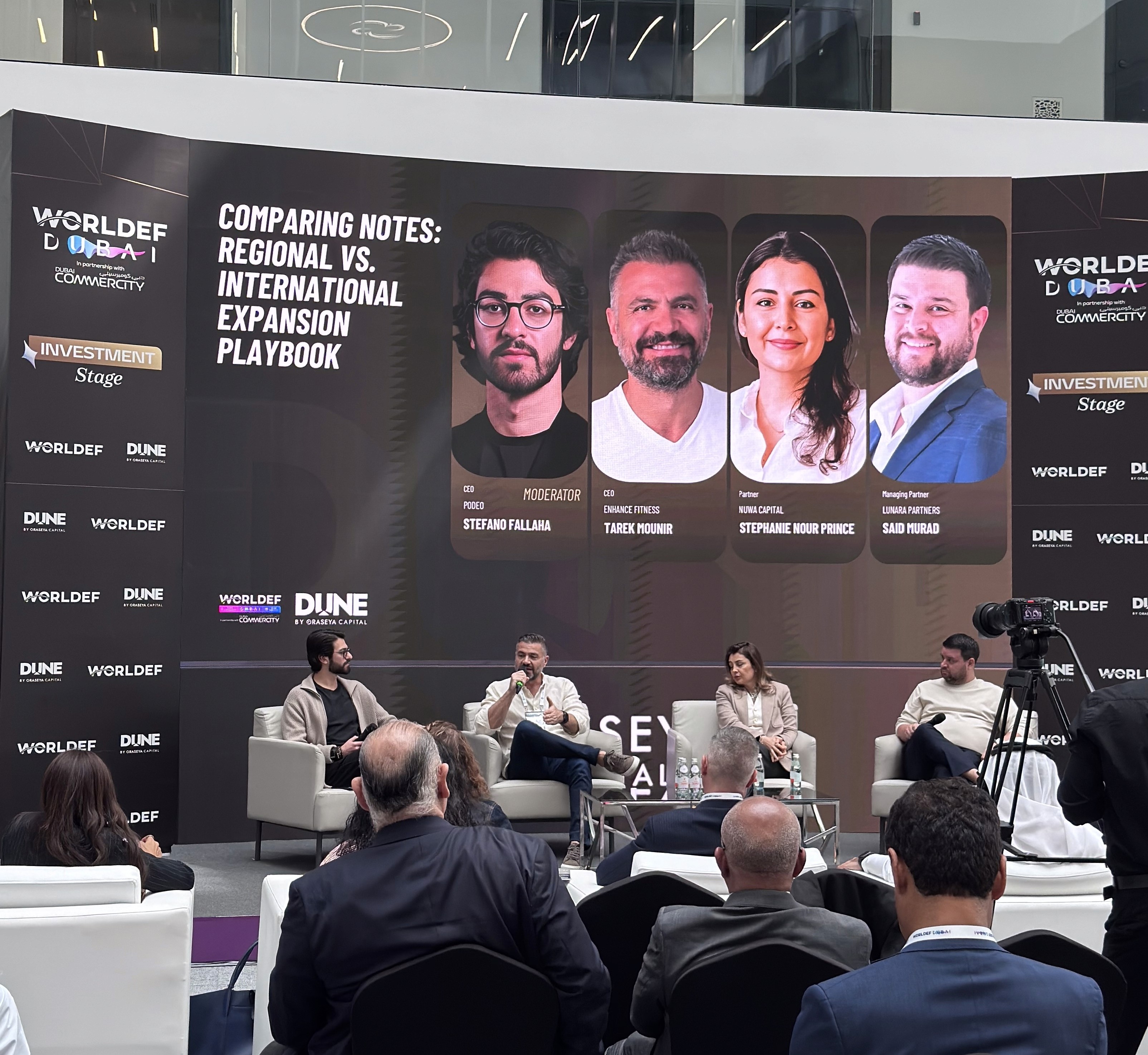
Third: offline presence. The UAE runs on events, conferences, and face-to-face meetings to a degree that surprises many digital-first founders. Exhibitions, industry conferences, and meetups aren't just lead generation — they're legitimacy signals. Being visible at a major industry event tells the market: we're here, we're serious, we're investing.
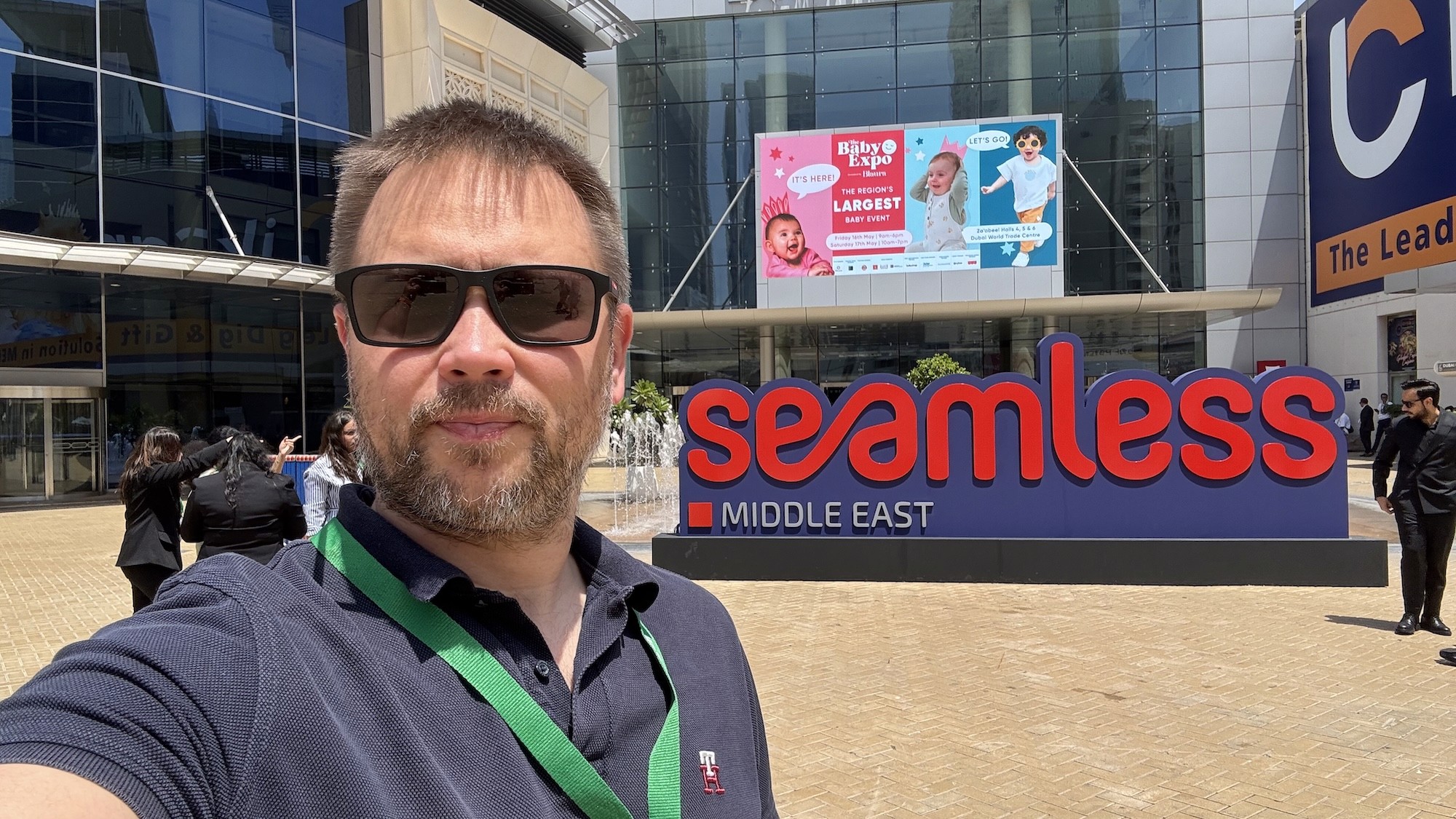
This has a direct implication for your go-to-market strategy. Pure performance marketing — running ads, capturing leads, converting online — works in the UAE. But it works much better when layered on top of brand presence and trust signals. Companies that rely solely on performance often find their cost per acquisition climbing and their conversion rates stalling, without understanding why.
The takeaway: the UAE rewards companies that invest in trust — through presence, brand, and personal relationships. If your market entry plan is purely digital and transactional, you'll hit a ceiling fast.
The "Biggest and Best" Is Not Vanity — It's a Business Model
This is a strategic point that sits above any specific marketing or branding decision, and missing it can misalign your entire approach.
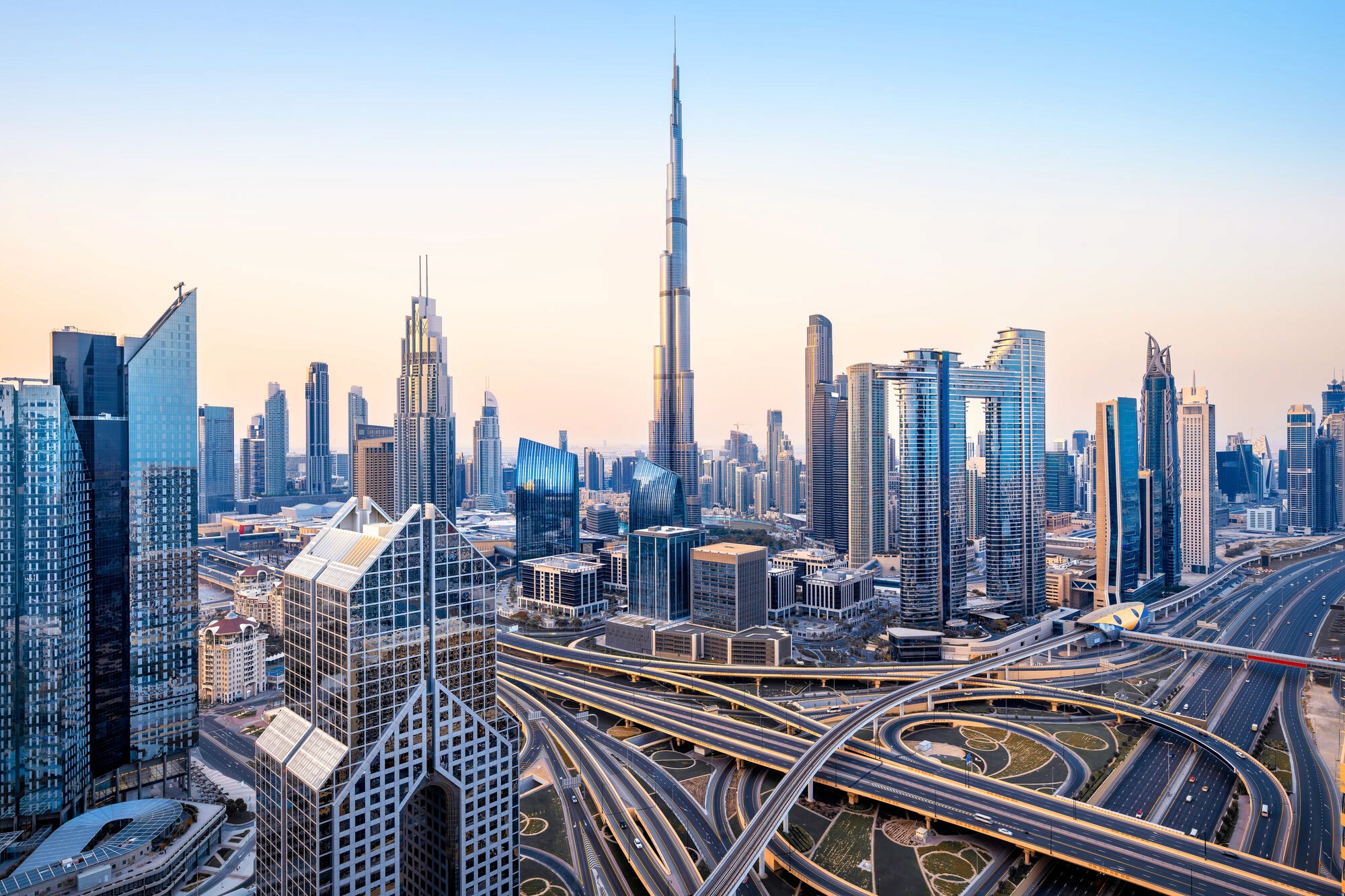
The UAE has a distinct visual and cultural language. It's a place that values the best, the biggest, the most impressive. But this isn't just cultural vanity — it's a business model. The UAE is fundamentally business-oriented, and "the tallest building," "the largest mall," "the most spectacular fountain" are not ego projects. They're traffic generation strategies. Every record, every superlative is designed to attract attention, drive footfall, and generate revenue — for the city, for the emirate, for the country.
This has a direct implication for your product. The question isn't just "does my product work here?" It's "does my product reinforce the UAE's positioning?" If your solution helps strengthen the country's appeal to tourists, entrepreneurs, investors, or residents — if it makes the ecosystem more attractive, more efficient, more impressive — you have a natural tailwind. If it doesn't fit into that frame, you'll find yourself swimming against the current without understanding why.
The takeaway: before you finalize your positioning for the UAE, ask yourself — does my product help this country be more of what it's trying to be? If yes, the market will pull you in. If not, you'll be pushing uphill.
Why Your UAE Brand Cannot Be Built Remotely
This is a lesson I learned viscerally, not theoretically: you cannot build a brand for the UAE market from outside the UAE.
I don't mean logo design or visual identity in the narrow sense. I mean the deeper work of making your brand feel native to the environment — the right color palette, the right tone, the right cultural resonances.
The UAE has a particular relationship with color — influenced by desert light, Islamic art, luxury retail, and a hyper-modern urban aesthetic. To build a brand that feels organic here, you need to see it. You need to walk through the malls, observe the signage, feel the light, understand what catches attention and what disappears. Without living here, without absorbing the daily texture of this place — the colors, the rhythms, the meanings — you simply cannot create a brand that feels like it belongs.
And here's a fascinating paradox. The UAE is one of the most open countries in the world — 200+ nationalities, global brands on every corner, a culture that welcomes everyone. And yet, within this openness, the country has managed to preserve and project a strong national identity. Emirati culture, values, and aesthetics are woven into the urban fabric in ways that are subtle but unmistakable. A brand that succeeds here doesn't just tolerate this identity — it respects and reflects it.
I've worked on brand development and implementation in multiple markets — from Europe to Asia. And in every case, the brands that resonate are the ones built by people who are immersed in the local context. In the UAE specifically, I found that color choices, messaging hierarchies, and even the pace of communication needed to be calibrated to the local environment.
Trying to do this from a design studio in Moscow or Berlin leads to brands that are technically competent but culturally flat. They don't attract attention. They don't create recognition. They don't feel like they belong.
The takeaway: if you're serious about the UAE market, your brand work needs to happen locally. Not just execution — the strategic and creative thinking as well.
The Alignment Trap: Product, Marketing, and Sales Must Move Together
This is one of the most common — and most expensive — mistakes in any market entry, and the UAE amplifies it — especially when your business functions are out of sync.
When product lags behind, marketing generates demand that can't be fulfilled. Leads come in, but the product doesn't deliver on the promise. Money is burned — and worse, trust is burned.
When marketing lags behind, even a strong product sits in silence. No one enters the funnel. There's no brand awareness, no credibility signal. The sales team has nothing to work with — no inbound interest, no warm leads, no recognition in the market.
When sales lags behind, leads that marketing fought hard to generate simply rot. No follow-up, poor qualification, wrong scripts, mismatched expectations. The conversion engine is broken, and the cost of every lead is wasted.
In the UAE, any of these misalignments is amplified. The market moves fast, costs are high, and — critically — trust, once lost, is extremely hard to rebuild.
In one project, we generated thousands of leads over a period of active campaigning. But the honest truth is that some leads were lost to misalignment — moments where one function was ahead of the others. Marketing was sometimes promoting capabilities the product was still building. Sales processes weren't always tuned to the lead volume. The "fake it till you make it" approach can work — but in the UAE, where customers compare you instantly to global alternatives and where trust is fragile, the gap between what any part of your machine promises and what it delivers closes faster than you think.
Another dimension: if your product competes in a commodity space, the customer's first question is often about price. In the fintech space, for instance, the first thing anyone asks is your rate. If your rate isn't competitive, the conversation doesn't even start, regardless of how good your product demo is. You need to understand this dynamic before you launch your first campaign, not after.
The takeaway: synchronize product readiness, marketing activation, and sales capacity before you go live in the UAE. If any one of the three is lagging, the other two can't compensate. The cost of misalignment here isn't just wasted budget — it's wasted trust, and trust is much harder to rebuild.
Partnerships: The Promise and the Reality
Strategic partnerships are often central to a UAE market entry strategy — and for good reason. A strong local partner can provide infrastructure, market access, credibility, and customer reach that would take years to build independently.

But here's what most companies underestimate: the speed at which partnerships deliver value. The UAE market looks fast (and sometimes it truly is) — company registration in days, business cards exchanged at every networking event. But deep commercial partnerships operate on a longer timeline. Cultural norms around relationship-building, hierarchical decision-making, and risk aversion in large organizations all extend the cycle.
Expecting different timelines in the UAE — with an external partner, no equity alignment, and cultural distance — was, in retrospect, optimistic.
The takeaway: build partnerships into your strategy, but don't build your revenue plan around them delivering in Year 1. Have a direct-to-market path that works independently. Use partnerships as an accelerator, not a dependency.
The UAE Hiring Paradox: Finding People Who Bridge Two Worlds
This might be the most underestimated challenge of entering the UAE market. Nobody talks about it until they've crashed into it at full speed.
The challenge is this: to succeed in the UAE, you need team members who understand the local environment — people who speak Arabic, who grasp the cultural and religious codes, who can navigate segments of the market that are invisible to outsiders. Without Arabic speakers, for instance, you're cut off from a meaningful portion of the business landscape. Without someone who understands local sensibilities, your messaging and sales approach can fall flat in ways you won't even notice.
But — and this is the critical part — coming from the countries with another business culture, decision-making speed and sensitivity, you also need people who match your standards of execution. The quality of work, the pace, the level of initiative, the attention to detail that you're used to from your home market.
These two profiles rarely overlap.
Hire locally for cultural fit, and you may find yourself managing people whose approach to deadlines, quality control, and proactive problem-solving is fundamentally different from what you expect. What's considered perfectly acceptable performance in the local market can cause acute frustration for a founder accustomed to, say, Russian or European work standards.
Hire someone from your own background for execution quality, and you lose the local intelligence that makes market entry work.
The real skill — and it takes time to develop — is finding people who sit at the intersection: culturally fluent, linguistically capable, AND aligned with your pace, ambition, and standards. Finding them is one of the most important investments of your first year in the UAE.
The takeaway: budget more time, more effort, and more money for hiring than you think. The team you build will determine whether your market entry succeeds or stalls — and the hiring challenge in the UAE is unlike anything you've experienced in your home market.
Why the UAE Deserves a Serious Approach
I want to close not with a summary of lessons, but with something broader — because if you've read this far, you already have the tactical picture.
The UAE is not just another market to enter. It's a genuinely remarkable environment for building a business.
I've heard from multiple entrepreneurs — across different industries and backgrounds — how struck they were by the way government ministries operate here. Clear, concrete, outcome-oriented. You walk into a meeting with a ministry and it feels like a negotiation with a well-run business, not a bureaucratic exercise. This isn't an accident. It's a reflection of how the country is designed.
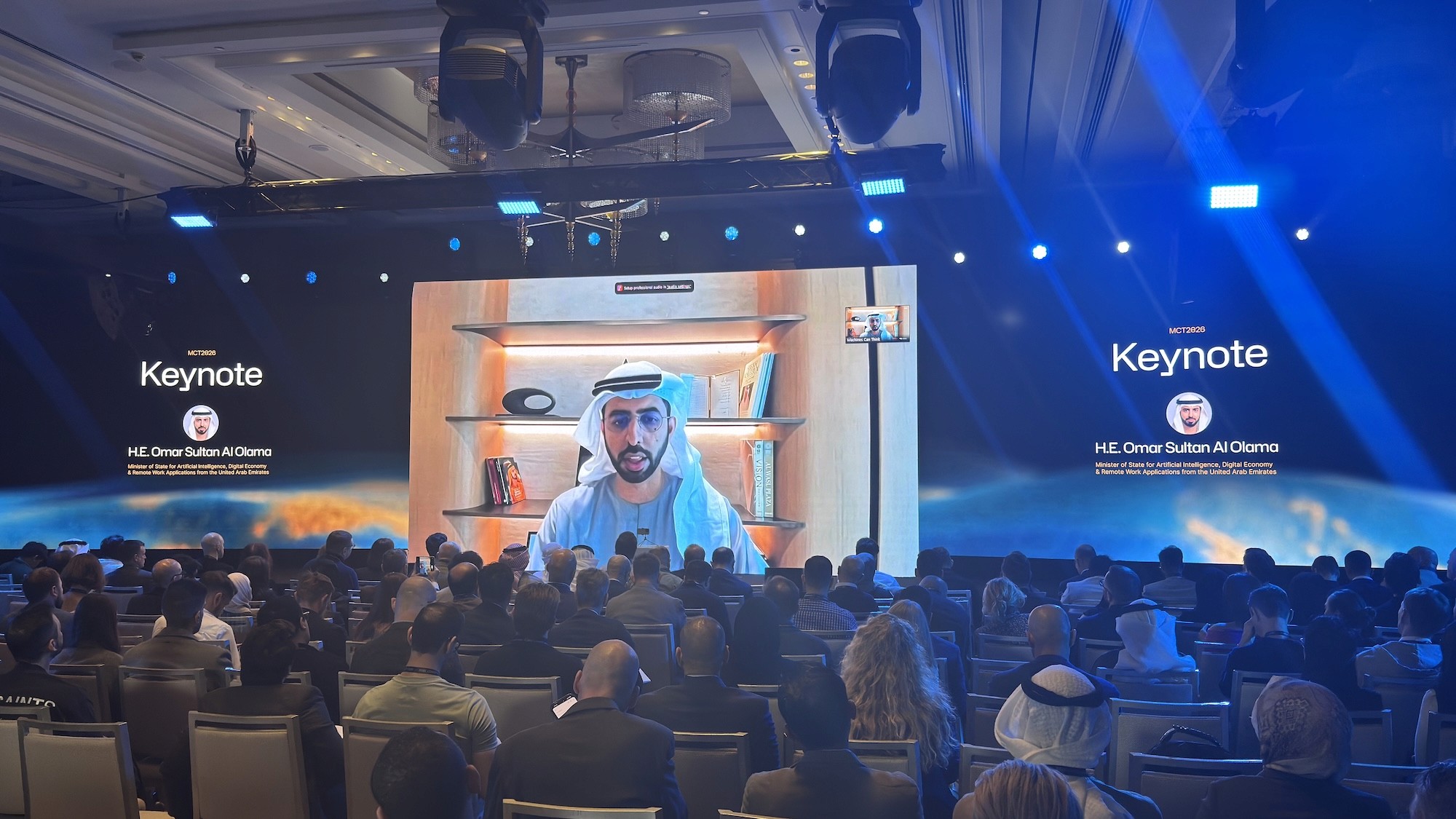
The UAE moves fast — not just by regional standards, but globally. Decisions that take months elsewhere happen in weeks here. Infrastructure that would be a multi-year project in Europe gets built and launched in a fraction of the time. The country is constantly iterating on itself, and it expects the same pace from the businesses that operate within it.
Strategically, the UAE is a gateway to the broader MENA region — and increasingly to Africa and South Asia. Companies that establish themselves here gain access to a network of markets that are growing rapidly but remain difficult to enter directly. Dubai, in particular, has built itself as a platform — a hub not just for trade, but for talent, capital, and ideas.
And beyond business: the quality of life, the safety, the infrastructure that simply works — these are the reasons people don't just visit the UAE. They stay. They build families. They put down roots. This creates a market of committed, long-term residents, not transient visitors — and that matters for any business thinking beyond a quick win.
What ties all of this together is a set of values that the market rewards: trust, long-term commitment, and ambition. Companies that come here with a short-term extraction mindset get filtered out quickly. Companies that come with genuine respect for the environment, a willingness to invest, and a long-term vision — those are the ones that thrive.
The UAE has earned the right to be approached seriously. I hope this article helps you do exactly that.
Ready to Discuss Your UAE Market Entry?
I wrote this article because I've seen too many companies enter the UAE with great ambition and a poor map. The terrain is navigable — but it's not what most guides describe.
At Vinden.one, I work with founders and business leaders who are preparing to enter the UAE and MENA markets — or who've already entered and need to course-correct. The work is strategic and hands-on: from market analysis and customer research to go-to-market architecture, brand strategy, partnerships, and team setup.
If anything in this article resonated — or raised questions about your own situation — let's talk. The best time to have this conversation is before you've committed your budget, your team, and your timeline to an approach that doesn't fit the market.